Tuesday, May 12, 2015

The Next Big Thing is Big Data

The iconic Hadoop logo from the infamous yellow elephant.
http://www.sas.com/content/dam/SAS/sv_se/image/logo2/hadoop_elephant.png
Welcome back everyone! I hope you're ready for a small change in pace to talk about a potentially big area of technology coming out. Big Data analysis is the new emerging area of technology that is reshaping the way technology will function on a large, potentially global, scale. While we have had big data for a while, the real "big data revolution is that we can now do something with the data." (King & Shaw, 1). Big data's current primary use is seen in the commercial industry such as in the use of advertisements. But big data's applications range far and wide, from assisting in police crime prediction, air quality and health associations, and even in genomic analysis of crop breeding (Shaw, 2). Without big data powering much of the world, large companies like Walmart, Amazon, Google, and Apple would have a significantly harder time adjusting to the ever changing desires of its customers and help ensure that everyone's needs are taken care of. Honestly, Tim McGuire and the rest of his team at Ivey Business Journal couldn't have said it any better, "Much of modern economic activity simply could not take place without them." (McGuire et al., 1). The problem with this is that unlike many other companies that can use data that already exists, Big Data today relies on another 
A small example of how to Hadoop map-reduces big data.
http://www.glennklockwood.com/di/mapreduce-workflow.png
element that changes the algorithm completely, time. "In addition to the sheer scale of Big Data, the real-time and high-frequency nature of the data are also important." (McGuire et al., 3). Because data is constantly flowing and changing, from media to business statistics and even with communication, time has become an important element when it comes to analyzing Big Data. While Big Data is still a budding new technology, its application in the real world will spark many significant changes such as the potential for stores to be more efficient at getting you to those new pair of shoes everyone else is buying. So tell me, do you think Big Data will be a huge hit in the market? Or do you think it is just another trend that will fade? I want to know what you think! Thanks and see you next time!


Works Cited

McGuire, T., Manyika, J., Manyika, J., & Chui, M. (2012, July 1). Ivey Business Journal. Retrieved May 12, 2015, from http://iveybusinessjournal.com/publication/why-big-data-is-the-new-competitive-advantage/

Shaw, J. (2014, March 1). Why "Big Data" Is a Big Deal. Retrieved May 12, 2015, from http://harvardmagazine.com/2014/03/why-big-data-is-a-big-deal

Wagner, D. (2014, October 2). The importance of big data analytics in business. Retrieved May 12, 2015, from http://www.techradar.com/us/news/world-of-tech/the-importance-of-big-data-analytics-in-business-1267606

Friday, April 24, 2015

Pitching like a Pro

Source: https://www.youtube.com/watch?t=142&v=phyU2BThK4Q
Hello everyone! Thanks again for returning. Today’s topic is on the 15-second pitch. It's been said many times before that elevator pitches can open up many opportunities for individuals and companies. Carmine Gallo of Forbes Magazine said, "If you can’t tell me what you do in 15 seconds, I’m not buying, I’m not investing, and I’m not interested." (Gallo) These Cold-Pitch elevator pitches are designed to spark interest in a potential employer, partner, investor, etc. There is a guideline presented by the University of North Caroline Asheville that follows a similar pattern to Gallo's 15-second pitch model. Both emphasize examples and potential company values you can offer. While Gallo does not state the necessity for a call-to-action, the UNC guideline does have a section at the end for a call-to-action, a way for you to say "what you are looking for." (UNC Asheville) While both styles of pitches can be extremely well executed, the UNC Asheville guideline is a lot easier to follow, especially for people who are not well versed in elevator pitches. With these two new guidelines to follow, do you feel more able to deliver an elevator pitch? I hope to hear what you guys think and whether or not these sources have helped you! I will see you all next time!


Works Cited

Gallo, Carmine. "How to Pitch Anything in 15 Seconds [video]." Forbes. Forbes Magazine, 17 July 2012. Web. 24 Apr. 2015. <http://www.forbes.com/sites/carminegallo/2012/07/17/how-to-pitch-anything-in-15-seconds/>.

University of North Caroline Asheville. "Creating Your 15-Second Pitch."Start Up Your Future. UNC Asheville Career Center. Web. 24 Apr. 2015. <https://career.unca.edu/sites/default/files/images/15 Second Pitch_0.pdf>.

Sunday, April 12, 2015

Learning Everything (about) Agile Right Now (LEARN)

http://www.refractions.net/expertise/agile/agile_diagram.jpg

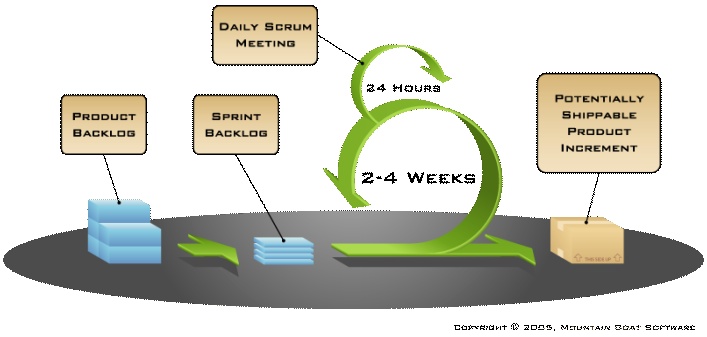
Agile is a new form of methodology that relies on recursive iteration throughout a project in order to achieve a more reliable way of releasing a product or service. Agile, according to PSInternalTraining, will help developers have a much higher chance of successfully releasing a product or service than the traditional waterfall methodology's <30% completion rate (PSInternalTraining). It does this by having the product iteratively be released, for example: Steam game developers often use this under the phrase "early access". Developers that do this, such as Keen Software House the developers of Space Engineers, will release the product in a more refined and finished state than before over time. The developers gather feedback and ideas from the community and then work on a small focused set of new features or improvements to release in the next version of the game. They gather "user stories" and then decide which ones to work on. In most other Agile work environments these user stories take the form of “As a ____ I want to ____ so I can ____” (PSInternalTraining). Most developers do not release a backlog to the public, we can be sure that the developers use a backlog to keep track of what tasks need to be finished and their priorities. Sprints usually last between two to four weeks and include daily scrums between the team that shows what progress has been made and ensure no obstacles are obstructing the team’s path. That’s the general idea behind Agile but there is much more to Agile than just this small excerpt. I hope you enjoyed this! Thanks again for reading, everyone, and I hope to see you next time!


Works Cited

PSInternalTraining. (2013, June 19). Scrum Training - Crash Course - 2013-06-18 [Video file]. Retrieved from https://www.youtube.com/watch?v=wNwfFStmtw8&t=71

Tuesday, March 24, 2015

Ownership and What it Truly Means to Own

http://www.clickminded.com/ wp-content/uploads/patent.jpg
Welcome back everyone! Today's topic is ownership. How much do we, as consumers, really own? We may think we own our phones, our computers, our apps because we bought them with our own money. And that may seem fine but we don't really own those products. The current patent holders of "your" goods are the real owners that are allowing you to use said goods. Take for example the average smartphone. According to Google's top lawyer, David Drummond, "the typical smartphone could be covered by as many as 250,000 patents."(Regalado) That means that a smartphone, even your phone, is intellectual property of up to 250,000 different owners. Most of these patents will be held by a select few, however. Not only that but large companies, such as Google, are claiming patents on technology that still does not exist yet such as computer glasses that project a keyboard onto the user's hand!(Regalado) What could this mean for developers? Because of these patents, it can be hard for some startup companies to succeed due to having to pay significant amounts of royalties to the current patent owner. This makes especially hard for those startups that use agile methodology, as the income from said project can be insufficient to allow for proper updating or fixing during subsequent sprints. This could also mean that any company or individual that tries to claim a patent from their prototype design, even something never before created, will still be patented and royalties will need to be paid. This can lead to what has been referred to as the "tragedy of the anticommons".(Heller & Eisenberg) This "tragedy", so to speak, is when a resource is prone to underuse due to multiple owners having rights to exclude others from said resource and no one has an effective privilege of use.(Heller & Eisenberg) Now, with that being said, I leave you with one last question. What do you really own? Thank you again for reading and I will see you again next time!

Works Cited
Regalado, A. (2013, November 29). Google's Growing Patent Stockpile. Retrieved March 21, 2015, from http://www.technologyreview.com/news/521946/googles-growing-patent-stockpile/

Heller, M., & Eisenberg, R. (1998). Can Patents Deter Innovation? The Anticommons in Biomedical Research. Science, 280(5364), 698-701.

Sunday, March 15, 2015

Using Agile In Your Project? Here's My Card...

http://www.rkathey.com/wp-content/uploads/2013/10/Piggy.jpg
Hello again everyone! Today I wanted to talk to you about a very useful system for working on projects called Agile. Agile, in short, is an iterative release of the product that gradually releases a more refined version rather than delivering a product at the end. Agile will make your life as a budding developer significantly easier and better. By using Agile, developers are able to better communicate with the customers, the development team, and the other teams working on the project, such as project managers and business analysts. Agile also helps cut the risk associated with a project due it its incremental/iterative nature (PSInternalTraining). "But how does it do that?" I hear you asking. Agile's manifesto changes the way the project is approached by all parties. It values individuals and interactions over processes and tools, working software over comprehensive documentation, customer collaboration over contract negotiation, and responding to change over following a plan (Pressman). This change in the way of approaching a project allows the team to deliver the product that the customer really wanted rather than a product the team things the customer wanted rather than a product that the team thinks the customer wanted. In my team's current project, designing a jeopardy-esque game for Green Ninja, we are using Agile and I can fully agree with the manifesto and everything else said about Agile. It really allows for better communication between everyone involved. And to help get used to the Agile terminology, it's really helped show me who are the "pigs" and who are the "chickens" in product development. I hope to hear what changes you guys have had switching to Agile, if you do. Like before, thank you very much for your time and I will see you next time!

Works Cited
PSInternalTraining. (2013, June 19). Scrum Training - Crash Course - 2013-06-18 [Video file]. Retrieved from https://www.youtube.com/watch?v=wNwfFStmtw8&t=71

Pressman, R. Agile Development [PDF document]. Retriefed from http://academic.brooklyn.cuny.edu/cis/sfleisher/Chapter_03_sim.pdf

Tuesday, March 3, 2015

Projects Project Future Career Projection


The Outsider game made for a class project.
Welcome back everyone! Today I wanted to talk about projects in Computer Science, projects are a valuable resource that is used in the industry on many different levels. Projects are important because they help show increased interest in that area of science, desire to continue improving on those skills, and even previous work experience. It can show increased interest by demonstrating that you are willing to go out of your way to research and work on your own. It can demonstrate desire to continue improving skills or even show previous work experience. This can be important whether or not a company will want to hire you. According to the Occupational Outlook Quarterly of 2014 STEM 101: Intro to Tomorrow’s Jobs, “In some STEM occupations, work experience in a related occupation is required at the entry level. For example, computer and information systems managers usually need at least 5 years of experience, first honing their technical skills in lower-level roles before moving to management.” This has been gathered from the Bureau of Labor Statistics and supports the claim that work 
Zombieworld remake text-based game project.
experience is strongly recommended for those in the Computer Science industry and projects, such as those finished for the other company, apply to this example. I have a few self projects I have worked on including a text-based game using Java, a 2D game constructed in GameMaker and an I/O Java application that would accept input, originally designed to receive input from the Dragon speaking software, and then save that input to a text document along with the user’s current name and the exact date and time. Projects can even be useful for learning different kinds of worth methodology, such as agile. Although I was not familiar with the official agile methodology at the time, I did construct these projects using an informal version of agile. There were no daily scrumms as there was nobody else to report to, the backlogs consisted of handwritten notes for features rather than official documentation and sprints consisted mainly of finishing a feature to test and then "release" said version for friends to try out for feedback. So remember, projects hold a plethora of valuable teaching tools and ways to demonstrate your skills and experience! I hope to hear what projects have helped you out with. Thanks again for reading and I hope to see you next time!

Works Cited
Stem 101: Intro to tomorrow's jobs. (Spring 2014). Retrieved March 25, 2015, from http://www.stemedcoalition.org/wp-content/uploads/2010/05/BLS-STEM-Jobs-report-spring-2014.pdf

Sunday, February 22, 2015

How many roads must a man walk down? Just one.

http://blogs-images.forbes.com/
mfonobongnsehe/files/2014/09/bill-gates.jpg
Hello again everyone! Before we get into the juicy bits of this blog I wanted to share just a little bit more about myself; more specifically, why I became part of the Computer Science community. I mentioned before how I started as a Chemistry major and switched to Computer Science but the reasoning behind it was never explained. I love Computer Science. To be quite honest, it is the only major/industry I was really interested in. The most visible way it shows it that Computer Science is the only subject I've made out-of-school projects in that I was really engaged in. I picked it up extremely fast and have even
caught up to some of my peers that have been programming for
http://vignette4.wikia.nocookie.net/mlpfanart/
images/7/7b/Steam_logo.png/revision/
latest?cb=20141228225438
significantly longer than me. Whether it be making applications, creating games, or developing a new program, the wall of text that many around me, who aren't part of the Computer Science community, shudder in fear at, makes perfect sense to me and I can "see" what the code will do. There are so many aspects of Computer Science that are available that the possibilities really are endless! Whether it be designing mobile applications, becoming a game developer, or going into research and development, there are many tasks that require computer scientists to fulfill those roles! Currently I have 3 projects under my belt including a text-based game self-project based off a similar game named Zombieworld, a GameMaker 2D game project for a previous class, and a freelance project for my brother that was supposed to work with Dragon except Java is the only language Dragon does not work with. Although I currently do not have a specific field of interest yet, I am still going to keep working on different kinds of projects that interest me. Whatever the future may hold, one thing is certain, there is definitely growth within the Computer Science industry. 22% projected growth, according to the U.S. Bureau of Labor Statistics. With plenty of opportunity, especially here in Silicon Valley, I can't wait to join the industry and begin working on my career. Thank you for reading and see you next time!

Works Cited
Summary. (2014, January 8). Retrieved March 25, 2015, from http://www.bls.gov/ooh/computer-and-information-technology/software-developers.htm

Sunday, February 15, 2015

I believe an introduction is in order...


Hello there everyone! My name is Nick Saric! I am here to talk about technology and help bring students up to date with it and even help make their lives easier in some places! I’m hoping some of you will find new technologies or even common ones with new/interesting uses you didn’t know about before. But before we begin I wanted to talk about myself. I'm currently a student enrolled at San Jose State studying Computer Science. I recently started my journey as a Computer Science major after switching from Chemistry so I have had a late start as compared to others but I have put in that much more effort to catch up to my peers. It has been an exciting journey thus far with classes and projects including the out-of-class projects I have done as well. Although much simpler compared to the projects I have heard my peers create, I hope one day to catch up to them and join the ranks of the many aspiring Computer Scientists in the world today. I am hoping that this blog will not only help others but will also help me in my journey. I look forward to hearing your guys’ thoughts and opinions on what I have to offer! Until then, I will see you next time.

Current Skills: Java, Photoshop, Organization, C, Object Oriented Design, Parallel Processing, Soldering.