Friday, April 24, 2015

Pitching like a Pro

Source: https://www.youtube.com/watch?t=142&v=phyU2BThK4Q
Hello everyone! Thanks again for returning. Today’s topic is on the 15-second pitch. It's been said many times before that elevator pitches can open up many opportunities for individuals and companies. Carmine Gallo of Forbes Magazine said, "If you can’t tell me what you do in 15 seconds, I’m not buying, I’m not investing, and I’m not interested." (Gallo) These Cold-Pitch elevator pitches are designed to spark interest in a potential employer, partner, investor, etc. There is a guideline presented by the University of North Caroline Asheville that follows a similar pattern to Gallo's 15-second pitch model. Both emphasize examples and potential company values you can offer. While Gallo does not state the necessity for a call-to-action, the UNC guideline does have a section at the end for a call-to-action, a way for you to say "what you are looking for." (UNC Asheville) While both styles of pitches can be extremely well executed, the UNC Asheville guideline is a lot easier to follow, especially for people who are not well versed in elevator pitches. With these two new guidelines to follow, do you feel more able to deliver an elevator pitch? I hope to hear what you guys think and whether or not these sources have helped you! I will see you all next time!


Works Cited

Gallo, Carmine. "How to Pitch Anything in 15 Seconds [video]." Forbes. Forbes Magazine, 17 July 2012. Web. 24 Apr. 2015. <http://www.forbes.com/sites/carminegallo/2012/07/17/how-to-pitch-anything-in-15-seconds/>.

University of North Caroline Asheville. "Creating Your 15-Second Pitch."Start Up Your Future. UNC Asheville Career Center. Web. 24 Apr. 2015. <https://career.unca.edu/sites/default/files/images/15 Second Pitch_0.pdf>.

Sunday, April 12, 2015

Learning Everything (about) Agile Right Now (LEARN)

http://www.refractions.net/expertise/agile/agile_diagram.jpg

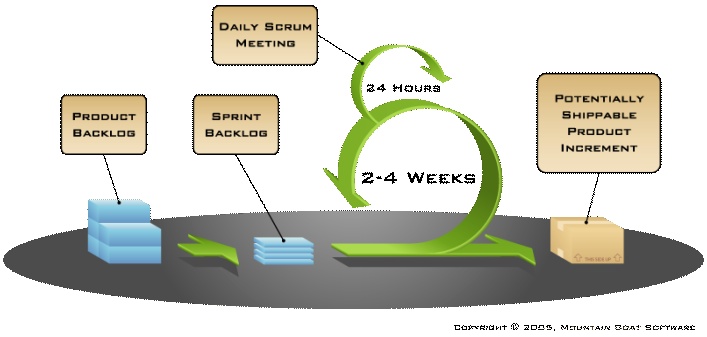
Agile is a new form of methodology that relies on recursive iteration throughout a project in order to achieve a more reliable way of releasing a product or service. Agile, according to PSInternalTraining, will help developers have a much higher chance of successfully releasing a product or service than the traditional waterfall methodology's <30% completion rate (PSInternalTraining). It does this by having the product iteratively be released, for example: Steam game developers often use this under the phrase "early access". Developers that do this, such as Keen Software House the developers of Space Engineers, will release the product in a more refined and finished state than before over time. The developers gather feedback and ideas from the community and then work on a small focused set of new features or improvements to release in the next version of the game. They gather "user stories" and then decide which ones to work on. In most other Agile work environments these user stories take the form of “As a ____ I want to ____ so I can ____” (PSInternalTraining). Most developers do not release a backlog to the public, we can be sure that the developers use a backlog to keep track of what tasks need to be finished and their priorities. Sprints usually last between two to four weeks and include daily scrums between the team that shows what progress has been made and ensure no obstacles are obstructing the team’s path. That’s the general idea behind Agile but there is much more to Agile than just this small excerpt. I hope you enjoyed this! Thanks again for reading, everyone, and I hope to see you next time!


Works Cited

PSInternalTraining. (2013, June 19). Scrum Training - Crash Course - 2013-06-18 [Video file]. Retrieved from https://www.youtube.com/watch?v=wNwfFStmtw8&t=71